
Craft method
Our Process: Slow Work Before a Small Capsule
The Chandra capsule is easy to take because the hard work happens earlier: milk, curd, churning, butter, ghee, full moon batching, and careful filling.
Bilona asks the maker to stay close
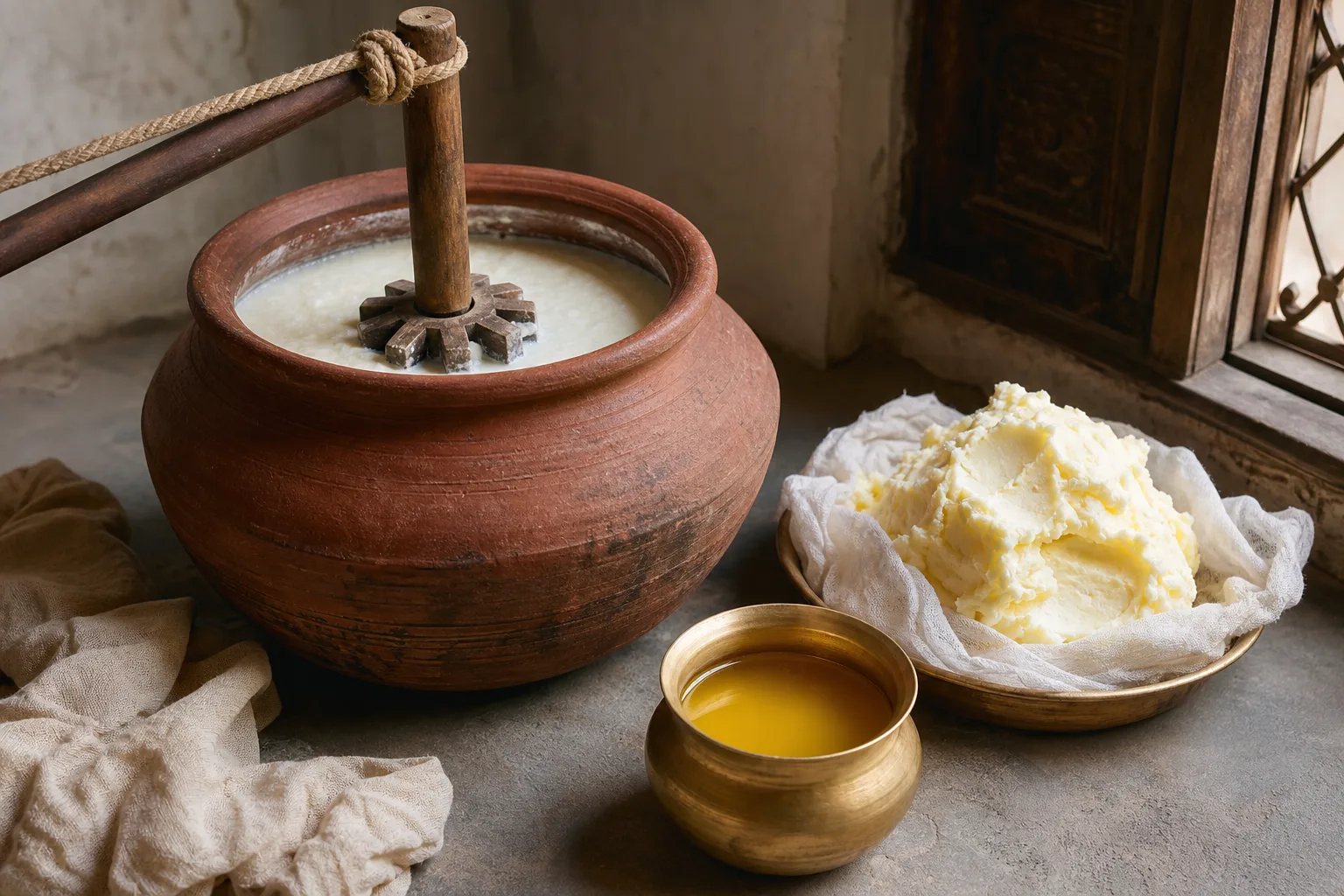
The Bilona method is slow because it asks the maker to stay present. Milk is boiled, cultured into curd, and churned with a wooden churner. Butter rises from the curd. That butter is then clarified into ghee.
Each stage changes the texture, aroma, and character of the ghee. The capsule may be modern, but the work before it is tactile, patient, and deeply traditional.

Care shows up in small steps
Bilona asks for attention at every turn: when the curd sets, how the churn moves, when butter separates, how the ghee smells as it clarifies, and when the color turns clean and golden.
We call these steps sanskars because the ghee is transformed slowly. It is not just processed. It is watched, handled, and brought forward with care.
- Milk is boiled and cultured in earthen pots.
- Curd is hand churned with wooden churners.
- Butter is collected and clarified into ghee.
- The ghee is prepared around the Pournima batch rhythm.
- The final ghee is filled into vegetarian capsules for daily use.
Why the small serving carries so much work
Chandra notes that about 32 liters of milk are needed to make 1 liter of ghee. That number makes the capsule feel different. A small serving can still carry a great deal of work.
Behind it are milk, time, heat, churning, separation, and patience. The capsule makes the ritual simple for you, but the ingredient remains precious to us.